The Quiet Ways Dogs Say “I Love You”
The morning is quiet in the best way. You’re standing in the kitchen with a cup of coffee warming your hands, sunlight slipping through the window in soft gold stripes, and your dog is nearby, watching you with calm, steady eyes. There’s nothing dramatic happening. No barking. No sprinting around the room. Just a dog, sitting close, as if being near you is exactly where life makes sense.
That small moment says more than words ever could. Dogs may not say “I love you” out loud, but they say it constantly in ways people often miss. Their love is built into instinct, loyalty, and the little habits that make up everyday life.
A Language of Trust
In a dog’s world, love is not usually loud or flashy. It shows up in eye contact, in following, in leaning, in sharing, and in the simple choice to stay close. These behaviors are rooted in trust, and trust is the foundation of the human-dog bond. Studies have found that mutual eye contact between dogs and their owners can increase oxytocin in both, reinforcing the sense of connection between them.
That’s part of what makes dogs so special. They do not wait for a perfect moment to show affection. They build love into ordinary moments, over and over again, until those moments become the bond itself.
The Eye Contact That Speaks Volumes
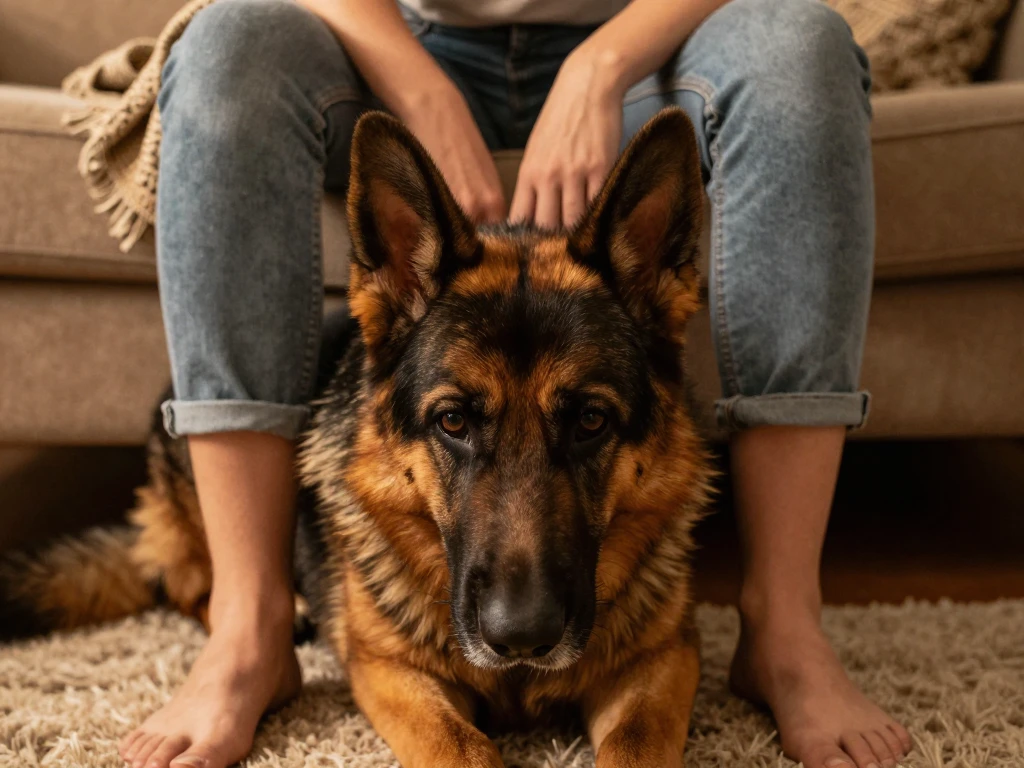
There is something unmistakable about the way a dog looks at you when they feel safe. It is not a hard stare. It is soft, relaxed, and unguarded. Maybe you notice it when you are sitting on the couch, or when you look down from your desk and find your dog quietly watching you from across the room.
That gaze feels meaningful because it is. Research shows that when dogs and humans gaze at each other, oxytocin rises in both species, strengthening affection and trust. Oxytocin is often called the “love hormone,” and in this case, it really does help explain why a simple look from your dog can feel so moving.
This is not dominance. It is connection. A calm gaze, especially when paired with a soft body, relaxed ears, and an easy face, usually signals comfort and attachment rather than tension. Your dog is not trying to challenge you. They are telling you, in their own quiet way, that they feel safe with you.
When your dog gazes at you, they are not just looking, they are connecting.
Following You Everywhere
If you have ever had a dog trail behind you from room to room, you already know this one. You stand up to get a glass of water, and they are there. You head toward the hallway, and they are right behind you. You open the bathroom door, and somehow they are suddenly very interested in whether you really need privacy.
It is funny, yes, but it is also deeply meaningful. Dogs are social animals, and staying close to their group is part of how they feel secure. Many behavior resources explain that dogs look to their humans as part of their social pack or family unit, and being near that trusted person gives them comfort and confidence.
What looks like clinginess is often just belonging. Your dog is not following you because they are bored or nosy, though they may be a little of both. They are following you because you are their safe place. Your routines, your voice, your scent, and your presence are all part of what makes the world feel stable.
To your dog, you are not just part of the pack—you are the pack.
The Tail Wag That Tells a Story
Few things feel better than coming home to a dog who is already excited before you even open the door. Maybe you hear the tail thumping before you see the face. Maybe the whole body starts wiggling the moment they recognize your footsteps. That tail wag is not random. It is emotional storytelling in motion.
A broad, loose, full-body wag usually means happiness and friendliness, especially when the dog’s hips, back end, and whole posture are involved. It is one of the clearest signs that your dog is genuinely pleased to see you. The more relaxed and sweeping the movement, the more likely it reflects joy rather than tension.
Tail language can be subtle, though, so the full picture matters. A stiff wag or a high, tight tail can mean something very different from a soft, sweeping one. But when your dog greets you with that open, wiggly, full-body movement, it is hard to mistake what they mean. They are not just excited. They are delighted.
A dog’s tail is their emotional compass—and it points straight to you.
Bringing You Their Favorite Toy
Then there is the moment your dog appears with their favorite toy in their mouth. Maybe it is a squeaky duck, a frayed rope, or a tennis ball that has seen better days. They drop it at your feet and stare up at you with expectant eyes, as if they are offering you something priceless.
In a way, they are.
When a dog brings you a toy they value, they are sharing a piece of their world. They are inviting you into their happiness, their play, and their trust. Dogs often use play to bond, and bringing you a toy is one of the most direct ways they say, “This matters to me, and I want you to be part of it.”
Sometimes the toy is less important than the interaction. Your dog may want a game of fetch, a tug, or just a few seconds of your attention. But even if the toy is dropped and left untouched, the gesture still means something. It is an offering. It is a bridge.
When a dog shares their favorite toy, they are sharing their happiness.
Leaning Against You
There is a special kind of comfort in the way a dog leans against you. Maybe they press their body into your leg while you are standing at the counter. Maybe they rest gently against your side while you are sitting on the couch. It is quiet, steady, and deeply grounding.
That lean is often a sign of affection, reassurance, and attachment. Physical contact matters to dogs, and contact with a trusted human can help them feel secure and calm. It is the canine version of a hug: simple, sincere, and full of trust.
What makes this gesture so moving is its lack of drama. It does not demand attention. It does not ask for anything. It just exists, right there beside you, as if your closeness is enough to make the world feel okay. That is the beauty of dog love. It can be bold, but it can also be wonderfully still.
Sometimes love does not need movement—just presence.
Reading the Whole Picture
One of the most important things to remember is that no single behavior tells the entire story by itself. A dog’s eye contact, tail wag, body posture, and proximity all work together. A soft gaze paired with a loose body means something very different from a stiff stare with a tense frame.
The same is true of following behavior and leaning. These signs usually mean affection and comfort, but the surrounding context matters. Dogs are individuals, and just like people, they each have their own habits and personalities. Some are more physically affectionate, while others show love more quietly.
That is why the bond becomes so rich over time. You learn your dog’s language. You begin to notice the small differences between excitement, reassurance, and curiosity. And once you do, the relationship feels even deeper, because you are no longer just living beside each other—you are understanding each other.
Returning to the Morning
Go back to that quiet morning in the kitchen. The coffee is still warm, the sunlight still rests on the floor, and your dog is still there, sitting close with the same steady devotion. Nothing flashy happened. No trick, no bark, no big performance. Just a series of tiny moments that would be easy to overlook if you were not paying attention.
But now you know what they mean. The gaze, the following, the wagging tail, the toy, the lean—each one is part of a language dogs have used forever. It is a language built on loyalty, trust, and unconditional presence.
Your dog has been saying “I love you” all along—you just learned how to hear it.
FAQ
How do dogs show love without words?
Dogs show love through body language, like soft eye contact, wagging, following, leaning, and bringing toys. These behaviors often reflect trust, comfort, and affection.
Is eye contact always a sign of love?
Not always. Soft, relaxed eye contact usually suggests trust and bonding, while a tense stare can mean something different. The dog’s overall body language matters a lot.
What kind of tail wag means happiness?
A loose, full-body wag with relaxed posture is usually a sign of happiness and friendliness. A stiff or tight wag can mean something else, so context is important.
Why does my dog follow me everywhere?
Dogs are social animals, and staying close to their trusted human can make them feel secure. Following you around often reflects attachment and comfort.
Why does my dog lean on me?
Leaning is often a sign of affection and reassurance. It can feel like a quiet hug and is usually a way for dogs to seek closeness and comfort.
Closing Reflection
Go back to that quiet morning in the kitchen. The coffee is still warm, the sunlight is still on the floor, and your dog is still there, watching you with that steady, calm devotion. There was no grand performance, but there was plenty of love.
That is the beauty of dogs. They do not need loud declarations to make their feelings known. Their love is found in the details, in the little moments that build a life together. Once you learn to notice them, you start to see that your dog has been saying “I love you” in a hundred quiet ways all along.
In a world full of noise, a dog’s love is beautifully simple—and always true.